
On Red Flags
Why do we overlook red flags when we know better?

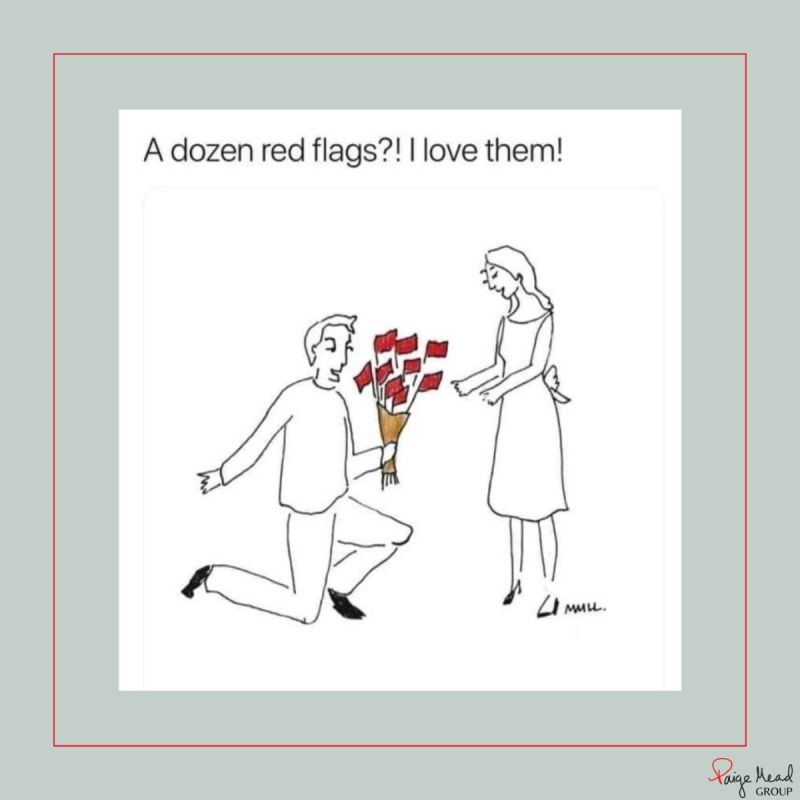
I distinctly remember the first red flag I consciously ignored. It was a relatively new relationship a while back, and we were keeping it pretty casual at the time. It was summertime I remember, and I had been navigating some difficult life stuff.
One particularly stressful and sad event had occurred during this time, and I was venting a bit, seeking some support I guess. But he immediately minimized my experience, telling me it was a minor inconvenience and that I had absolutely nothing to complain or lament about.
I remember being so caught off guard, thinking just how absolutely inappropriate it was for someone who supposedly cared about me to invalidate my feelings so directly. I thought to myself, this has to be a fluke. There’s no way this person just took the issue I described and was upset about and completely brushed off my feelings.
So I ignored it. And—shocker— it happened again. And again. Invalidating my feelings and then using that as a pivot to discuss how his life was so hard compared to mine became kind of a regular thing.
And each time it happened, I would think back to the first event and how I’d overlooked it. And I thought to myself that smart women don’t necessarily miss red flags. They negotiate or excuse them away.
It usually starts small: a comment that feels off. Maybe a reaction that doesn’t match the situation. Maybe something you can’t quite pinpoint, just enough to make you pause and then keep going anyway.
You’d spot these red flags instantly in a friend’s relationship. So why do they disappear in your own?
Why Do We Ignore Red Flags?
My first answer here is we like to give people the benefit of the doubt, right? A one off could be just that. In an emotionally mature dynamic, maybe the next day you’d say, hey, that interaction felt off to me, and it felt like you were invalidating my feelings and what happened. Maybe they apologize and do better next time. No biggie. Maybe they get defensive and turn it back around on you. Red flag #2 covering up red flag #1. That should go on their record.
High functioning women don’t fall for the “wrong” men by accident. They do it through a series of logical decisions where they reason the behavior away: He didn’t really mean that. He’s not like that. He was just stressed.
Intelligent and emotionally literate women may override their instincts until things get better.
I was talking to a friend recently, a woman who’s experienced a couple high functioning yet emotionally abusive relationships. And here she found herself tangled again. How did she get here. Again?
At a low point she found herself in a situationship she assumed wouldn’t go anywhere. From the outside this guy was a total package: good looking, good job, nice family, etc etc. They were super compatible and had mad chemistry.
Her relationship before him had been boring, quiet. An avoidant. As an anxiously attached person, she found that relationship triggered her abandonment wounds, and they were not able to move past this fissure.
So when she got involved with this intoxicating new person, the exact opposite of her ex, she overlooked his red flags. He love bombed her despite saying he wasn’t ready for anything serious, and she fell for it despite alarm bells. She told herself it was just for fun until, a year later, they were fully involved.
He was (still is, I presume) a master manipulator, and as their situationship progressed she shrugged off the volatility during arguments. The lack of repair. He regularly told her, “I don’t want a relationship,” but this triggered the urge to change him, inspire him to meet her on her level. Help him. A project.
Eventually he told her he wanted to see where things would go, so it went.
He just gets mean occasionally. When it’s good; it’s great. Ugh, this type of rationalization is a classic trap in relationships. It normalizes inconsistency and implies that it’s okay for things to be mediocre or even bad most of the time, as long as there are occasional high points. This can make someone settle for emotional volatility, where “highs” feel exciting but “lows” are tolerated or ignored.
You can actually get addicted to the cycles of highs and lows. That dopamine hit when things are great. And the emotional rollercoaster. Relationships that are great sometimes often feel intense and addictive, because the contrast between good and bad triggers a strong emotional response. Normal consistent healthy relationships can feel boring, especially if you grew up around chaos and drama. 🙋♀️ But hot-cold cycles create a hook that rewires your brain. It’s an emotional addiction.
Over time, this pattern is exhausting or even harmful to mental health.
From the outside looking in, I told her she’d become way more negative and reactive since she’d been hanging out with him. She kind of brushed it off, citing work stress.
Chronic relationship stress is one of the most overlooked drivers of stress and aging. The irony is that loneliness will kill you, but bad relationships kill you faster.
It’s a slow death by a thousand cuts. The day to day tone shifts. slight put-downs, the walking on eggshells, the avoided conversations because you might unintentionally set the other person off. The self betrayal while you wait for the next high and you get that dopamine hit. It erodes your sense of self over time.
The health effects of toxic relationships are slow. Chronic stress raises cortisol which creates inflammation, a main driver of chronic illness. I see this stress-contributing-to-imbalance-and-illness regularly in my nutrition practice.
Your gut feelings are information from your nervous system. When something feels off, that’s your body trying to tell you something important. And you have every right to speak up, to ask questions, to expect transparency and partnership in decision-making.
Red flags feel like anxiety in the body long before they become obvious behaviors.
You’ll know when staying feels like a daily erosion of your spirit. You’ll know when your gut tells you that staying would mean betraying yourself. You’ll know when you’d rather face the uncertainty of the unknown than the certainty of ongoing pain.
Red Flags Aren’t Invisible
They’re often rationalized.
Most people don’t miss red flags. They reinterpret them, explain them away.
You could explore how self-awareness becomes self-gaslighting when we override intuition with psychology-speak.
Now don’t get me wrong, many people do miss red flags. But emotionally literate people rationalize them. They’re not choosing “wrong;” they’re choosing what is familiar.
For example, those who’ve done the work, the therapy, unpacked their patterns; they understand unhealthy dynamics. But regardless, they may find themselves in a unhealthy relationship both because “normal” healthy relationships feel boring, and despite red flags, they’re used to—and even comfortable with—the chaos that tumultuous relationships bring.
You can almost see it happening in real time, yet you stay. That’s because it’s easier to recognize unhealthy patterns than it is to step out of them. And the inconsistencies activate that dopamine cortisol response to which we can actually become addicted.
Stability feels boring if your baseline is stress.
The Cost of Ignoring Red Flags
